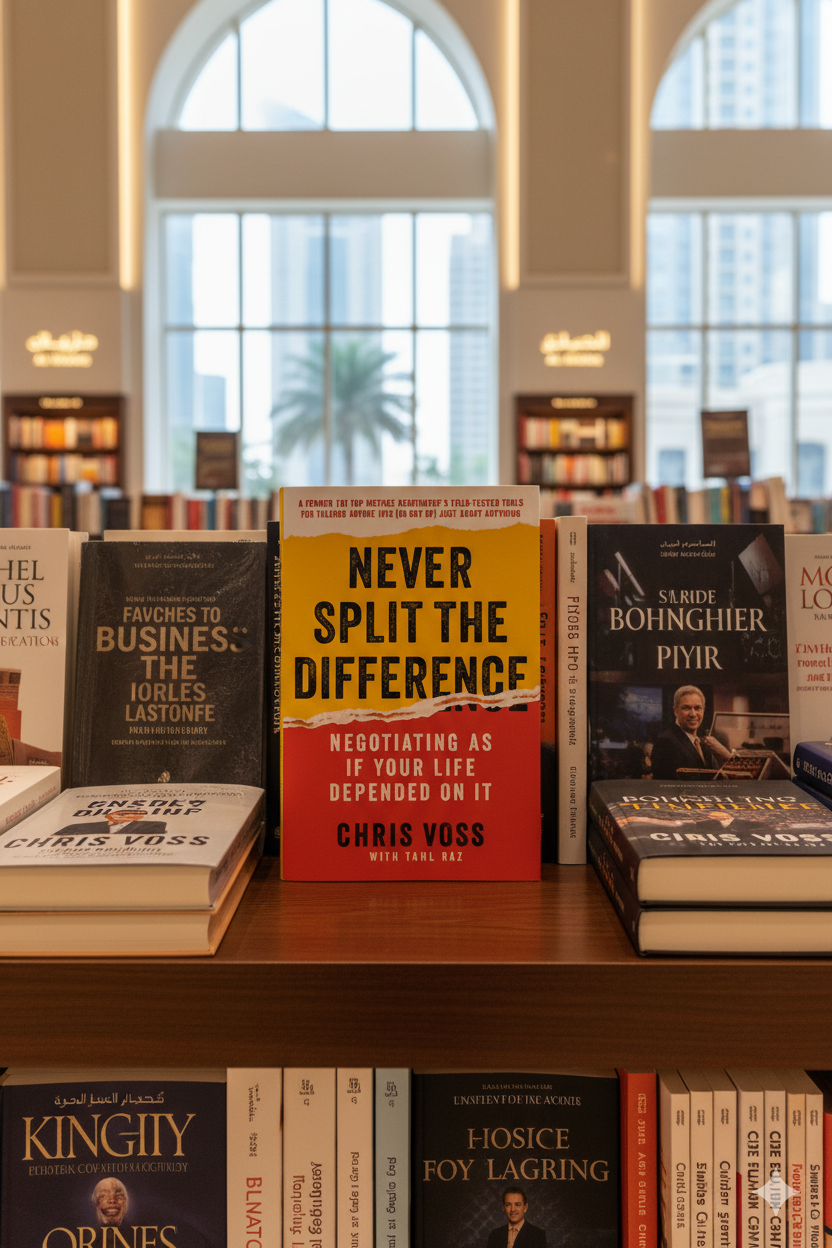
Reading Chris Voss’s Never Split the Difference felt less like flipping through a negotiation manual and more like being invited into the high-stakes world of an FBI hostage negotiator who has lived through impossible scenarios and distilled them into practical wisdom. What struck me most was how immediately applicable his techniques are—not just in boardrooms or business deals, but in daily conversations, patient interactions, and even personal relationships.
The central message is clear: compromise is not always the best solution. “Splitting the difference” often leaves both parties dissatisfied. Instead, Voss teaches us to listen deeply, build trust through tactical empathy, and guide the other side toward outcomes that feel like their own idea. His concepts like mirroring, labeling emotions, and the tactical pause sound simple on the surface, but when practiced, they completely shift the dynamics of a conversation. I found myself replaying real-life situations in my head, realizing how often I defaulted to logic and persuasion when what really works is understanding the emotional undercurrent driving the other person.
The book is peppered with gripping stories—from negotiating with terrorists to delicate business dealings—that keep you hooked while reinforcing the principles. For me, the chapter on the power of “No” was eye-opening. Instead of chasing “Yes,” Voss argues that getting someone comfortable enough to say “No” gives them control and lowers their defenses. I tried reframing a recent discussion using this insight, and the difference in tone and cooperation was undeniable.
What makes this book stand out is its practicality. These are not abstract theories. Voss provides scripts, phrases, and mental frameworks you can test immediately. Whether negotiating a salary, closing a deal, or simply trying to influence a conversation at home, the tools apply across the board.
As someone who balances clinical practice, business negotiations, and creative projects, I see Never Split the Difference as a must-read playbook. It isn’t about being aggressive or manipulative—it’s about being human, observant, and intentional. By the end, I didn’t just learn negotiation tactics; I learned a more empathetic way of communicating, one that respects the other person while still aiming for the best possible outcome.
In short, this book reshaped the way I think about conversations that matter. It’s earned a permanent spot on my shelf—not as a one-time read, but as a manual I’ll return to whenever I need to prepare for important discussions.